
1. It Looks Like India’s Going to get a Web Filter, by Nikhil Pahwa, Medianama. 2. Up-vote all you want, but the Internet isn’t a democracy, by Caitlin Dewey, The Washington Post. 3. A Horse of a Different Color: What robotics law can learn from cyberlaw, Ryan Calo, Slate. 4. Embracing HTTPS, By Eitan Konigsburg, Rajiv Pant and Elena Kvochko,…
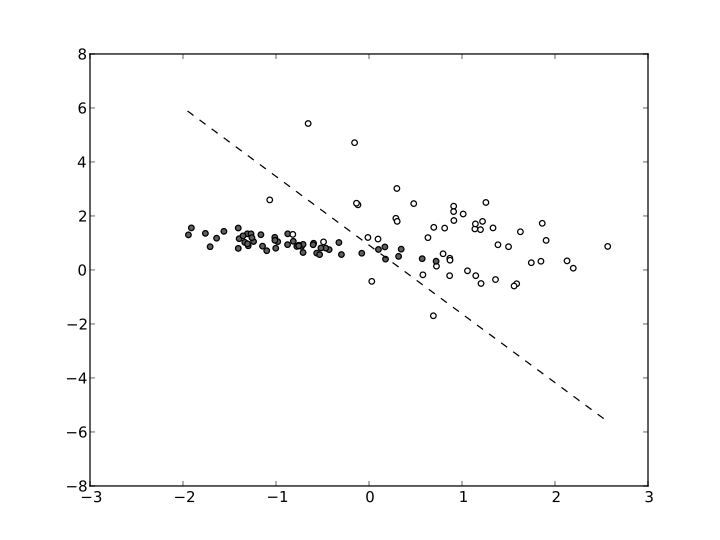
Machine Learning: An Explanation
Have you ever wondered how the spam in your mailbox is automatically detected? And what about speech recognition or handwriting recognition? These are quite challenging problems. But luckily they have one thing in common – that is data, and a good deal of it. Machine learning aims at creating systems that learn from data using various computer science…

Announcement: New Guest Editor, giving us the perspective of an Engineer!
It is my great pleasure to announce our new Guest Editor, Sahebjot Singh. Sahebjot is currently a computer science major at the Manipal Institute of Technology, and is an avid programmer and web developer, who also enjoys dabbling in physics. He has worked earlier at a few startups, including Fracktal Works, a 3D Printing startup,…
Techlawtopia – on the intersection of Technology, Law, and Society
Amlan Mohanty, an NLSIU-grad currently working at Trilegal and an all round Technology Law scholar (read: stud), has launched a new project – Techlawtopia. Techlawtopia is a non-profit website exploring the intersection of technology, law and society, and has blog posts, legal resources, and primers (which, personally, I found extremely interesting) on technology law-related topics. The website already looks quite interesting,…

Battling Goliath: An Analysis of the National Privacy Principles (Part I: Principles One to Four)
(Image Source: https://flic.kr/p/igPaVp) This is the first in a two-part post on the National Privacy Principles(NPPs). This post provides with a bit of background, and then deals with Principles One through Four, while the next will deal with Principles Five through Nine. Footnotes are especially important. Disclaimers: The first post is a bit on the longer…
Battling Goliath: An Analysis of the National Privacy Principles (Part II: Principles Five to Nine)
(Image Source: https://flic.kr/p/igPaVp) This is the second in a two-part post on the National Privacy Principles. This post deals with Principles Five through Nine. Footnotes are especially important. Disclaimers: I have taken a bit of artistic license with these two posts, so do allow for that. Feedback, comments, recommendations, are welcome. Following up on the previous post,…

Editors' Picks (09/11/2014)
1. Google’s New Open Source Privacy Effort Looks Back to the ’60s, by Elizabeth Dwoskin, Wall Street Journal Blogs – Digits. 2. Global Web Crackdown Arrests 17, Seizes Hundreds Of Dark Net Domains, by Andy Greenberg, Wired. 3. India Plans to Deal with Malicious Cyber-activities With New National Cyber Coordination Center, by Radu Tyrsina, Technology Personalized. 4. Facebook sees a 24% increase…

Privacy on Facebook: An Absolute Prerequisite
[Image Source: http://flic.kr/p/86Q3gF] Social networking websites have taken the Internet by storm in today’s organic society. One such website, Facebook, with over a billion users has often been referred to as the ‘third largest country’ of the world. The rise of Facebook to soaring heights can be credited to first, the intensive monitoring of its users…
The Concept of a Software Patent in India
Image Source (9 to 5 Mac, available at http://goo.gl/igU7Bd) A new challenge to the legal profession, particularly in the domain of intellectual property rights, has been that of examining the idea of a software. New software, with varying levels of originality or innovation is created every day. If you made one unlike anybody else ever had…

The Status of Electronic Surveillance Laws in India: An Overview (Part II)
(Image Source: https://flic.kr/p/6YSTmq) The following is the last in a series of two posts on the Electronic Surveillance laws in India, brought to us by Anurag Dasgupta, CNLU Patna. FEW OTHER STATUTES WHICH AIM AT REGULATING SURVEILLANCE IN INDIA